



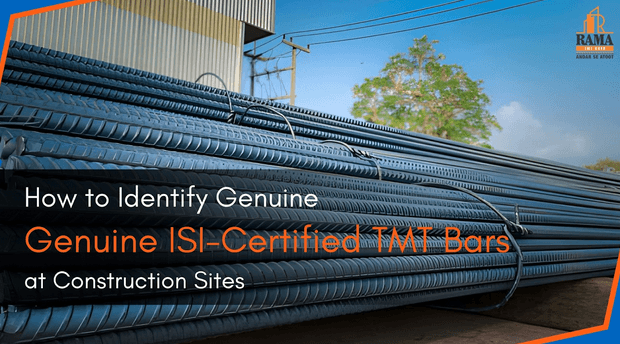
When it comes to building a safe and long-lasting structure, quality construction materials make all the difference. Among these, TMT bars (Thermo-mechanically Treated bars) are a critical component, forming the backbone of reinforced concrete. However, the market today is filled not only with genuine products but also with substandard and fake TMT bars, which can seriously compromise structural safety.
What Are TMT Bars and Why ISI Certification Matters
TMT bars are high-strength reinforcement bars used in concrete structures like beams, slabs, columns, and foundations. They are known for their ductility, strength, and flexibility, which help structures withstand earthquakes, heavy loads, and environmental stress.
Why ISI Certification Is Important
The ISI mark is a quality certification by the Bureau of Indian Standards (BIS) — India’s national standards body. An ISI-certified TMT bar means the product:
- Meets strict quality standards
- Has been tested for chemical composition, tensile strength, and elongation
- Will perform reliably in construction
- Offers safety and durability
Without this certification, there is no guarantee of quality, putting your project and investment at risk.
1. Check for the ISI Mark and License Number
The easiest way to spot genuine TMT bars is to look for the ISI mark stamped clearly on the bar. Genuine bars have:
- ISI mark embossed along the length
- License number of the manufacturer
- Brand name clearly visible
Tips while checking:
- The embossing should be clear and legible
- It should be applied at regular intervals (every 1 metre or so)
- Avoid bars where the mark looks faded, uneven, or scratched
2. Verify the Manufacturer’s Name and License Code
Every ISI-certified product comes with a BIS license number. You can use this to verify authenticity.
How to verify:
- Check the license number embossed on the bar.
- Visit the Bureau of Indian Standards (BIS) website or use a collector app.
- Search the license number to confirm:
- The license is active
- The product category is correct (TMT Steel)
- The manufacturer is genuine
Always double-check if the license number matches the brand and product type.
3. Inspect the Packaging and Delivery Documents
At the construction site, you should cross-verify delivery paperwork with the physical product.
Important paperwork includes:
- Mill test certificate (MTC)
- Invoice and delivery challan
- Brand packing list
- Supplier’s certification of authenticity
What to look for:
- Matching grade and size details
- Consistency between documents and actual bars
- No missing or unclear entries
4. Physical and Visual Inspection of TMT Bars
Even with ISI marking, a basic physical inspection helps ensure you’re getting quality bars.
Surface Finish
- Real TMT bars have a clean, rust-free surface
- They are uniformly deformed, with clearly defined ribs and lugs
- Avoid bars with pitting, rust patches, or uneven ribs
Colour Test
- Genuine TMT bars often have a distinct silver/steel sheen
- The surface should not look dull or overly dark (which could indicate poor quality or rusting)
5. Conduct Simple On-Site Tests (With Caution)
While laboratory tests give accurate results, there are a few simple on-site checks that give a quick indication of quality.
Bend Test
Pick a small bar and bend it:
- A good TMT bar bends without cracking
- It should return to shape slowly and not break
Hammer Test
Tap lightly with a hammer:
- A genuine TMT bar gives a clear ringing sound
- A dull sound may indicate inferior quality
These are preliminary checks only. They don’t replace professional testing, but help in quick decision-making on-site.
Pick a small bar and bend it:
6. Beware of Common Fake TMT Bar Tactics
Fraudsters often try to mimic genuine TMT bars. Be vigilant of:
❌ Fake ISI Marks
Some suppliers stamp counterfeit ISI marks on low-grade steel.
❌ Mixing Grades
They might mix Fe 410 and Fe 500 TMT bars, or pass off lower-grade bars as high-strength.
❌ False Documentation
Forged mill certificates and fake brand labels are common.
How to avoid this:
- Always deal with trusted, reputable suppliers
- Track deliveries from licensed mills
- Demand checks at each stage of delivery
7. Understand TMT Bar Grades and Codes
TMT bars are graded based on yield strength (measured in megapascals, MPa):
- Fe 415
- Fe 500
- Fe 550
For most residential and commercial construction, Fe 500 is widely used. Always ensure the grade mentioned in your documents matches the design requirement of your structure.
8. Use Third-Party or Lab Testing When Necessary
For high-value or critical structural work, consider sending samples to a recognised testing lab. These tests analyse:
- Chemical composition
- Tensile strength
- Elongation
- Bend and rebend capacity
Reports from BIS-recognised laboratories give confidence that steel meets required standards.
9. Establish a Supplier Verification Process
To avoid future issues, create a supplier verification checklist:
- Supplier’s BIS license number
- History of supplying quality products
- References from other builders
- On-site sample inspection before bulk delivery
- Transparent documentation and delivery tracking
A verified supplier reduces the chance of receiving fake or substandard bars.
10. Why Choosing Genuine ISI-Certified TMT Bars Is Non-Negotiable
Using poor-quality steel may:
- Reduce structural strength
- Lead to cracks, corrosion, and early failures
- Compromise on earthquake resistance
- Increase long-term maintenance cost
- Risk, safety, and human lives
By using authentic ISI-certified TMT bars, you ensure:
- Safety and durability
- Compliance with Indian standards
- Peace of mind for builders and owners
- Higher resale value
Frequently Asked Questions (FAQs)
Q1. What is the ISI mark on TMT bars?
The ISI mark is a certification from the Bureau of Indian Standards indicating that the TMT bar meets Indian quality standards.
Q2. How can I verify the BIS license number?
You can verify the license number on the BIS website or using BIS-verified apps to ensure it’s genuine and active.
Q3. Are all branded TMT bars safe?
Not necessarily. Even branded bars should be checked for valid ISI certification, license numbers, documentation, and supplier authenticity.
Q4. Can visual inspection alone confirm quality?
No. Visual inspection helps you rule out obvious defects, but lab testing and ISO certifications provide real quality assurance.
Q5. Why do fake TMT bars enter the market?
Due to high demand and profit margins, unethical suppliers sometimes sell low-grade bars with fake markings to cut costs.
Choosing genuine ISI-certified TMT bars is a crucial step in ensuring the strength, safety, and longevity of any construction project. By carefully checking ISI markings, verifying BIS license numbers, inspecting documentation, and conducting basic on-site quality checks, builders and site engineers can effectively avoid substandard or fake steel. Investing in authentic TMT bars not only enhances structural performance and earthquake resistance but also reduces long-term maintenance risks. For reliable, safe construction, always source TMT bars from a trusted TMT bar Manufacturer in Raipur and authorised suppliers, as the quality of the steel used today determines the structure’s stability for decades to come.
Choose Rama TMT Strength
👉 Contact us today to get expert guidance and the best TMT bars for your construction project.